Summary
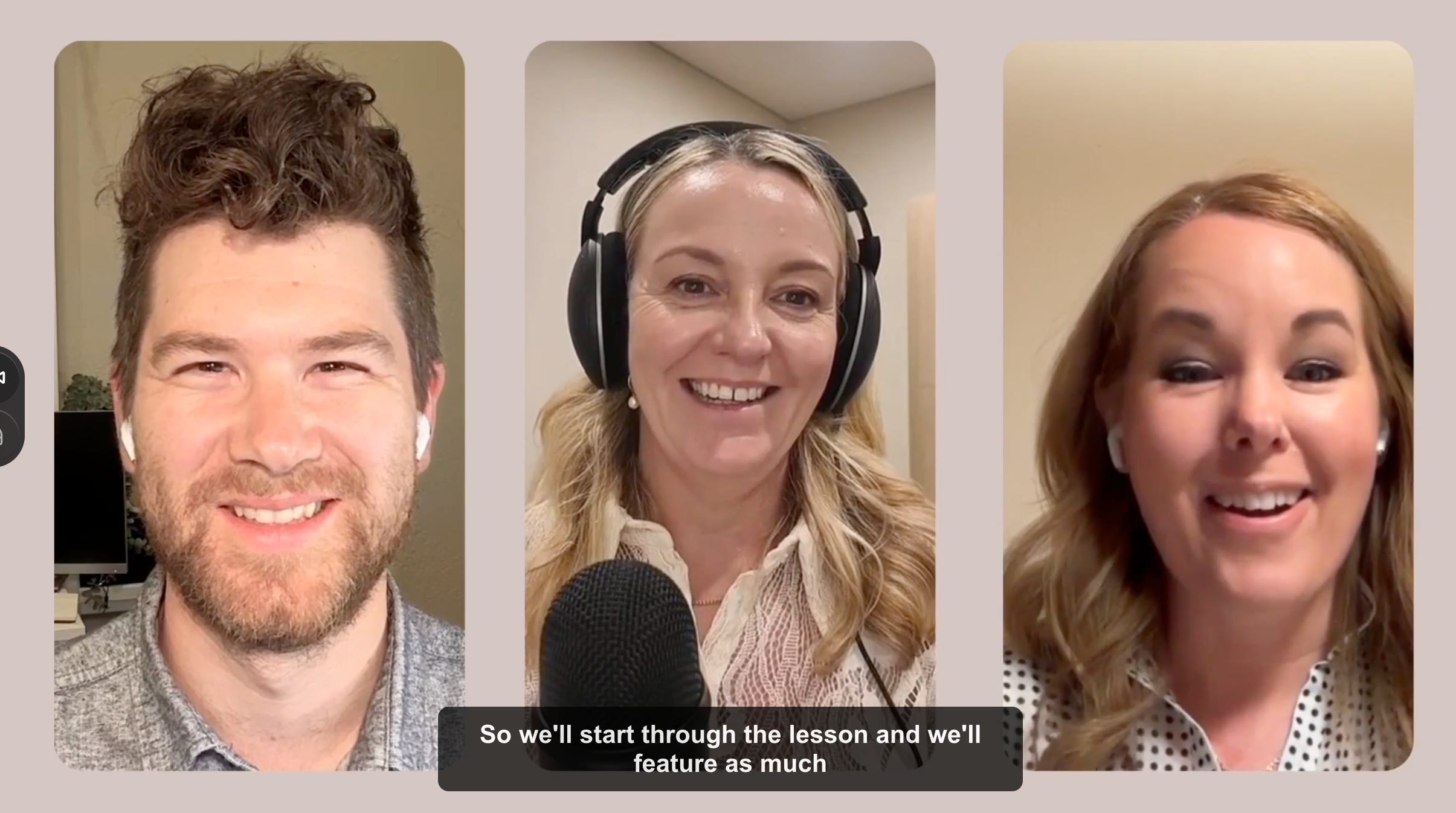
In this episode of Chalk Dust, Rebecca Birch and Dr Nathaniel Swain are joined by Laura Stam, a third grade teacher in Wyoming, writer of The Knowledge Exchange on Substack, 2024–2025 Goyen Fellow, and founding board member of The Reading League Wyoming. Laura takes us inside a knowledge-rich history lesson on the earliest Native American peoples of North America, with a particular focus on the Arapaho and Shoshone peoples of Wyoming.
The episode explores how a text-based lesson can be highly interactive, precise, and content-rich without becoming fragmented. Using a knowledge organiser, document camera, shared reading, choral responses, pair shares, sentence stems, and a co-constructed Venn diagram, Laura shows how students can build deep knowledge while also practising reading, speaking, listening, and writing. The conversation highlights how explicit teaching can remain flexible and responsive when the content itself drives the lesson.
Across the episode, Rebecca and Nathaniel unpack the small moves that make the lesson work: high participation, full sentence responses, careful questioning, purposeful pauses, and frequent opportunities for students to rehearse and elaborate their thinking. The result is a classroom where students are excited to contribute, but supported enough to do so with precision and confidence.
Mentioned resources and explainers
The Knowledge Exchange
Laura’s Substack, focused on building teacher knowledge through practical resources, classroom examples, and reflections on evidence-informed teaching.
The Reading League Wyoming
Laura is a founding board member of The Reading League Wyoming, part of a broader movement supporting knowledge about evidence-aligned reading instruction.
Core Knowledge History and Geography
Laura adapted parts of the lesson from Core Knowledge History and Geography materials on the earliest Americans, then supplemented them with local content on the Arapaho and Shoshone peoples.
Knowledge organiser
A one-page resource that captures key knowledge for a unit, including timelines, maps, vocabulary, and important facts. In this lesson, the knowledge organiser supports retrieval, review, previewing, and coherence across lessons. More on this here.
Document camera / visualiser
Laura uses a document camera rather than slide decks so she can move flexibly between texts, maps, organisers, and student work. It allows live modelling, annotation, and co-construction.
All hands up
A participation routine where all students prepare an answer and raise their hands, giving the teacher a sample of responses while maintaining high accountability.
Sentence stems
Structured sentence starters that help students answer in full sentences and elaborate their thinking. Laura uses them to support oral responses and later written work.
Pair share: windows and doors
Students are assigned as “windows” or “doors” partners so they know who speaks first. This keeps pair discussion efficient and gives every student an opportunity to rehearse.
Shared reading with cloze responses
Laura reads aloud while students follow the text and chorally supply missing words when she pauses. This keeps attention high and gives students frequent opportunities to respond.
Phrase reading
Students are called on to read short sections aloud, with support as needed. Laura uses this carefully so all students can participate without embarrassment.
Advance organiser
Nathaniel connects Laura’s knowledge organiser to the idea of an advanced organiser: a structure given before learning that helps students make sense of new information.
Venn diagram
Laura uses a co-constructed Venn diagram to help students compare and contrast the Arapaho, Shoshone, Inuit, and Eastern Woodlands peoples. This supports conceptual links across lessons.
Listen or view, and support our work
📨 Substack — sign up
🍏🎧 Apple Podcasts — like, review and follow
🎵💚 Spotify — follow and rate
📺🔔 YouTube — subscribe and like
✍️ Rebecca’s Substack — read more
✍️ Nathaniel’s Substack — read more
Takeaways
Knowledge-rich lessons can be highly interactive when students are given frequent, purposeful opportunities to respond.
Knowledge organisers help students see the structure of a unit and retrieve important information across lessons.
A document camera can support flexible teaching, live modelling, and co-construction more fluidly than a slide deck.
Full sentence responses help students clarify their thinking orally before writing.
Pair shares distribute enthusiasm and give all students a chance to rehearse ideas, not just the keenest hands.
Stopping during shared reading helps students hold on to important information rather than losing the beginning of the paragraph.
Cloze responses during reading keep attention high and help students practise key vocabulary in context.
Explicit teaching does not have to be rigid; in a text-based lesson, the content can guide the movement between modelling, guided practice, and independent work.
Co-constructed notes and diagrams reduce cognitive load before students move into independent writing.
Strong scaffolding makes independent practice calmer, more productive, and more successful.
Keywords
knowledge-rich curriculum, Laura Stam, The Knowledge Exchange, Core Knowledge, knowledge organiser, document camera, visualiser, shared reading, cloze responses, phrase reading, full sentence answers, sentence stems, pair share, all hands up, Venn diagram, advanced organiser, explicit teaching, cognitive load, Native American history, Arapaho, Shoshone, classroom talk